ChatGPT Images 2.5 Introduces Sunburst and Flare API Models
Simon Willison reports OpenAI's ChatGPT Images 2.5 release, adding two API model IDs, gpt-image-2.5-sunburst and gpt-image-2.5-flare, with claimed improvements in multi-turn instruction following, speed, and reference-photo subject preservation.
ChatGPT Images 2.5 was reported on September 8, 2026, with two new API model IDs: gpt-image-2.5-sunburst and gpt-image-2.5-flare. The announcement states that OpenAI's image-generation models have been used to create more than three billion images across ChatGPT Images and the GPT-Image API models. The version is described as improving instruction-following across multiple turns, responding faster, and better preserving subjects in reference photos.1
Context
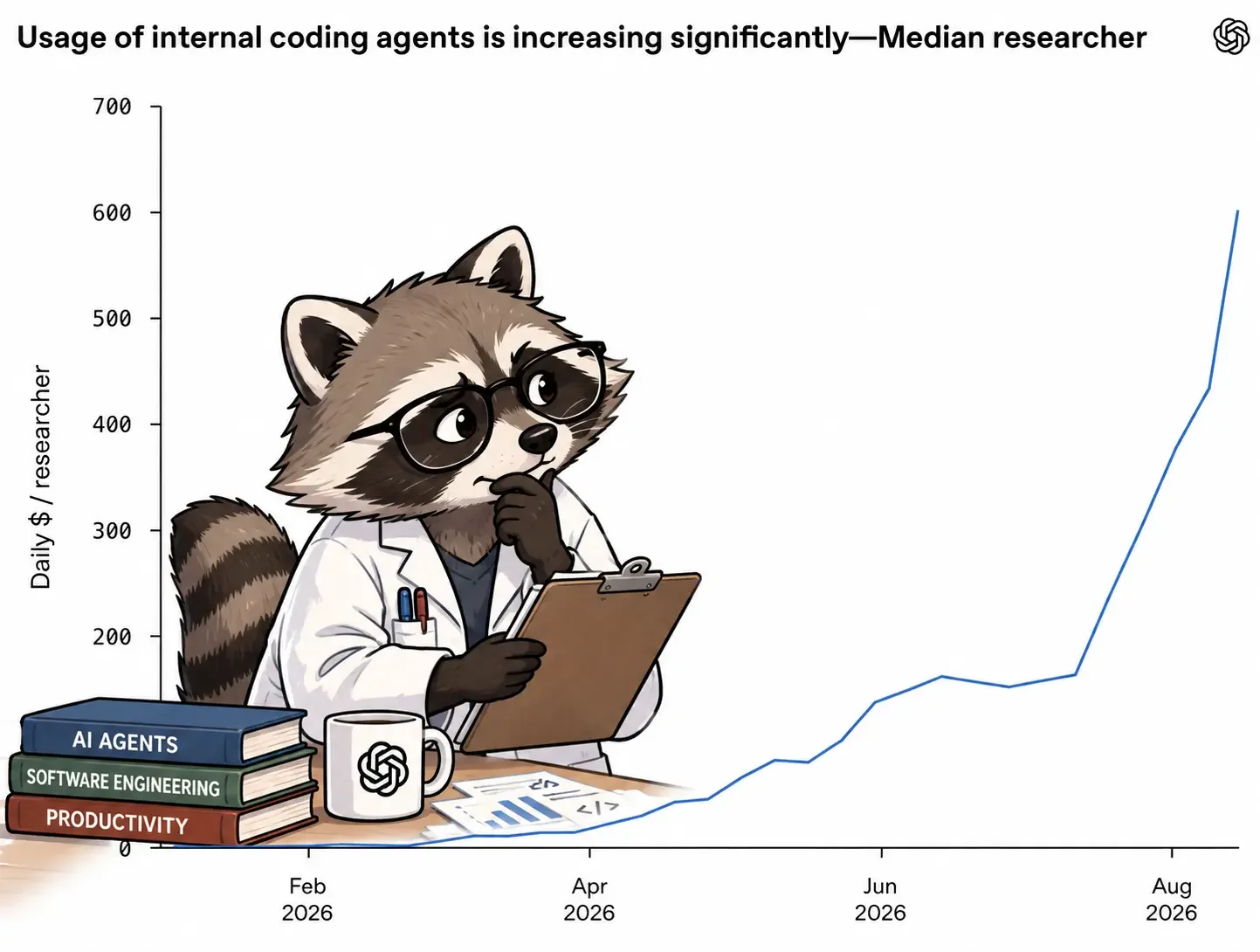
The document demonstrates one API use: Willison upgraded his openai_image.py command-line tool to accept reference images and invoked it to add a raccoon scientist studying a chart, using the model gpt-image-2.5-sunburst with an external image URL. A resulting image description shows the chart with the cartoon added, providing exactly one concrete example of the claimed reference-image editing behavior.1
Assessment
What is new here is not merely an incremental image-model update but the productized split between editing-precision and everyday-generation behavior. The quoted guidance positions Sunburst for workloads where editing precision matters most and Flare for fast, high-quality everyday generation. If this distinction is meaningful, it changes the operational constraint for developers: the same API now offers an explicit trade-off between editing fidelity and generation speed, rather than forcing both goals through one model and a single prompt.1
Caveats
The supporting evidence is a single blog post with one user-visible edit, and the claims are inherited from OpenAI marketing language. What would change my mind is controlled third-party measurement: if multi-turn editing and reference-subject preservation show no meaningful improvement over prior models, or if Sunburst and Flare turn out to be behaviorally indistinguishable in independent tests, the announced shift is mostly narrative. Conversely, detailed API documentation, pricing, latency numbers, and systematic evaluations would strengthen the case that a real constraint moved.1
Introducing ChatGPT Images 2.5. OpenAI's image generation models are apparently used "more than 3 billion images across ChatGPT Images and the GPT‑Image models in the API". This latest release improves their instruction-following ability across multiple turns, responds faster, and "is better at preserving the subjects in your reference photos".
There are two new model IDs in the API: gpt-image-2.5-sunburst and gpt-image-2.5-flare . Based on this I think Sunburst is the stronger option:
Choose Sunburst for workflows where editing precision matters most, and Flare for fast, high-quality everyday image generation.
I upgraded my openai_image.py CLI tool to support passing in one or more reference images, so now this works:
uv run https://tools.simonwillison.net/python/openai_image.py \ 'add a raccoon scientist studying the chart thoughtfully' \ -i https://static.simonwillison.net/static/2026/openai-agent-usage.webp \ -m gpt-image-2.5-sunburst
This is the original image, and here's what I got back from that prompt to "add a raccoon scientist studying the chart thoughtfully":
Recent articles
The Pelican comparison grid for Astra is pretty interesting - 4th September 2026
OpenAI's rogue agents were caught communicating via public wikis - 4th September 2026
Claude's new system prompt really doesn't want to reproduce song lyrics - 2nd September 2026
The source text above remains the property of its publisher and is reproduced for commentary.