Apple M6 and M5 Ultra: Process and Packaging Leap for On-Device AI
Apple’s August 2026 announcement introduces the M6, its first 2nm chip, and the M5 Ultra, its first quad-die SoC, in the Mac mini and Mac Studio. The release claims large gains in CPU/GPU compute and unified memory bandwidth, positioning the Mac Studio for on-device LLMs; however, all performance data comes from Apple’s own preproduction testing.
Apple announced the M6 in the Mac mini and the M5 Ultra in the Mac Studio, positioning both as a step change in desktop performance and on-device AI compute. M6 is Apple's first 2 nm chip, with a 12-core CPU, 12-core GPU, and Dual 16-core Neural Engine; M5 Ultra is Apple's first quad-die SoC, combining two dual-die M5 Max packages via UltraFusion and scaling to a 36-core CPU, 80-core GPU, and 512GB of unified memory.1
Context
The release situates these parts in the M-series roadmap: M6 is a mainstream/prosumer chip with up to 32GB memory and 170GB/s bandwidth, while M5 Ultra targets pro and AI workloads with 1.2TB/s bandwidth, 50% higher than M3 Ultra. The most notable constraint shift is local memory capacity and bandwidth: Apple claims the Mac Studio can hold large LLMs with hundreds of billions of parameters entirely on device.1
Assessment
The substantive novelty is process node (2 nm) for M6 and die-packaging (quad-die) for M5 Ultra, plus Neural Accelerators in each GPU core. Apple reports up to 2x Neural Engine peak compute, roughly 30% GPU AI compute increase for M6, and up to 4.5x GPU AI compute for M5 Ultra, but all figures are vendor-supplied and derived from preproduction units tested in August 2026.1
Caveats
Independent benchmarks and shipping hardware are absent; power draw, thermals, price, and real workload latency are not disclosed. The 'world's fastest' CPU core and multi-generational speed-ups should be treated as Apple's claims until third-party results appear. Confirmatory evidence would be independent measurements with production systems, especially for token-generation speed and end-to-end on-device LLM inference; disconfirmatory evidence would be materially lower real-world performance or higher power draw in reviews.1
Apple introduces M6 and M5 Ultra for a big leap in performance and AI compute
M6, Apple’s first 2 nm chip, features a larger, more powerful 12-core CPU, 12-core GPU, and Dual 16-core Neural Engine, while M5 Ultra is Apple’s first quad-die architecture and its most powerful chip ever
CUPERTINO, CALIFORNIA Apple today debuted M6 in the new Mac mini and M5 Ultra in the new Mac Studio, providing an extraordinary leap in performance and AI capabilities. M6, Apple’s first state-of-the-art 2-nanometer chip, advances every compute block, delivering gains across every dimension of performance. The chip features a larger 12-core CPU complex with the world’s fastest CPU core, a larger 12-core GPU with Neural Accelerators, a Dual 16-core Neural Engine, and up to 170GB/s of unified memory bandwidth.1 M5 Ultra, the ultimate powerhouse for pro and AI workloads, uses next-generation UltraFusion technology to form a quad-die architecture for the first time in an M-series system on a chip (SoC). The chip includes an up-to-36-core CPU and up-to-80-core GPU with a massive 1.2TB/s of unified memory bandwidth, 50 percent more than M3 Ultra. With their advanced technologies, these SoCs deliver extraordinary compute with industry-leading power efficiency, empowering users to do even more on a desktop.
“Today, we’re debuting the next giant leap in performance and AI compute for Apple silicon with the incredibly advanced M6 and the most powerful M-series chip yet, M5 Ultra,” said Sri Santhanam, Apple’s vice president of Silicon Engineering Group. “Built using the cutting-edge 2 nm process, M6 combines a new CPU complex, two additional CPU and GPU cores, a Dual 16-core Neural Engine, and more unified memory bandwidth to power through workloads with amazing energy efficiency. And for the ultimate desktop performance and the ability to run massive AI models, M5 Ultra features a massive GPU, now with Neural Accelerators, and more unified memory bandwidth, pushing the boundaries of what a desktop can do.”
M6: Optimized Design and Enhanced Performance
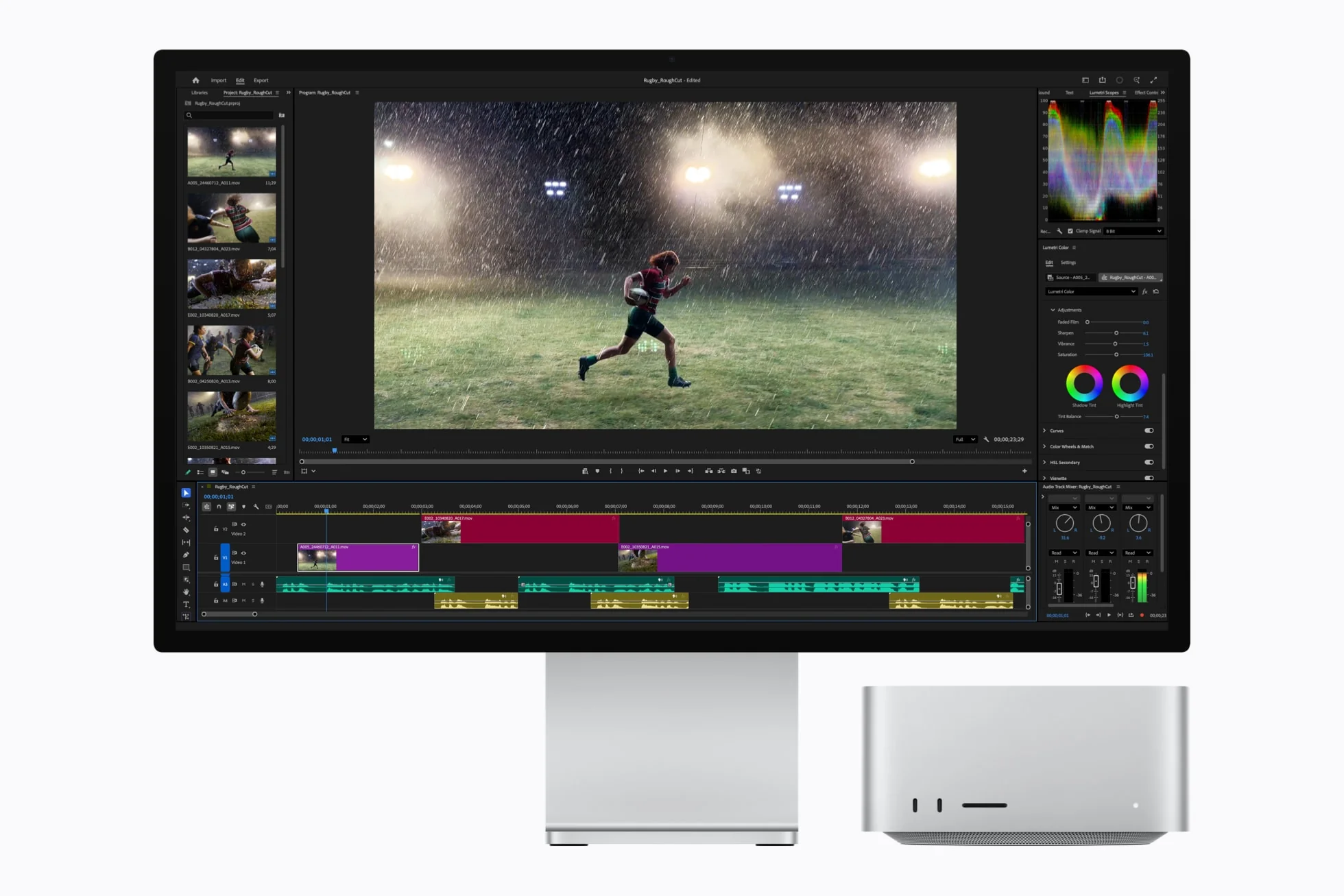
Designed to power the workflows of everyday users, students, developers, AI hobbyists, and enterprises, M6 offers the ideal balance of performance, power efficiency, and on-device AI to effortlessly fly through daily tasks, coding, and creative projects.
M6 is built using cutting-edge 2 nm process technology, packing greater transistor density into a smaller die for a major leap in performance and power efficiency. M6 also introduces a Dual 16-core Neural Engine, providing up to 2x the peak compute over previous generations to make on-device AI workflows run even faster. System frameworks can automatically utilize both engines simultaneously, enabling applications to see faster model execution.
M6 has a brand-new 12-core CPU complex — two more cores than M5 — that consists of 2 super cores, 4 performance cores, and 6 efficiency cores. It delivers the world’s fastest single-threaded performance and up to 1.2x faster multithreaded performance as compared to M5, and up to 2.4x faster than M1.2 The super cores blaze through single-threaded workloads, the performance cores use less power and join the super cores to run demanding multithreaded workloads, and the efficiency cores handle everyday background tasks — all with industry-leading performance per watt. As a result, demanding CPU tasks such as editing images, compiling code, indexing new files, and running agentic AI workloads are faster than ever.
Accelerated GPU and Faster Memory Bandwidth
M6 features a 12-core GPU — two more cores than M5 — with a Neural Accelerator in each core. This design delivers a nearly 30 percent increase in peak GPU compute for AI compared to M5, and more than 8x compared to M1, enabling significantly faster prompt processing when interacting with on-device LLMs.2
In addition, M6 offers Apple’s latest advanced graphics capabilities, including updates to the shader core architecture, Dynamic Caching, and hardware-accelerated ray tracing. These technologies combine to deliver stunning visual realism, faster rendering, and higher frame rates for gaming. M6 also has 50 percent increased geometry rates for complex graphics.
M6 supports up to 32GB of unified memory to multitask across demanding apps and run LLMs on device for secure and private agentic tasks. It also provides up to 170GB/s of unified memory bandwidth — a 10 percent increase over M5 and a 2.5x increase over M1.
M5 Ultra: The Ultimate Powerhouse for Pro Workflows
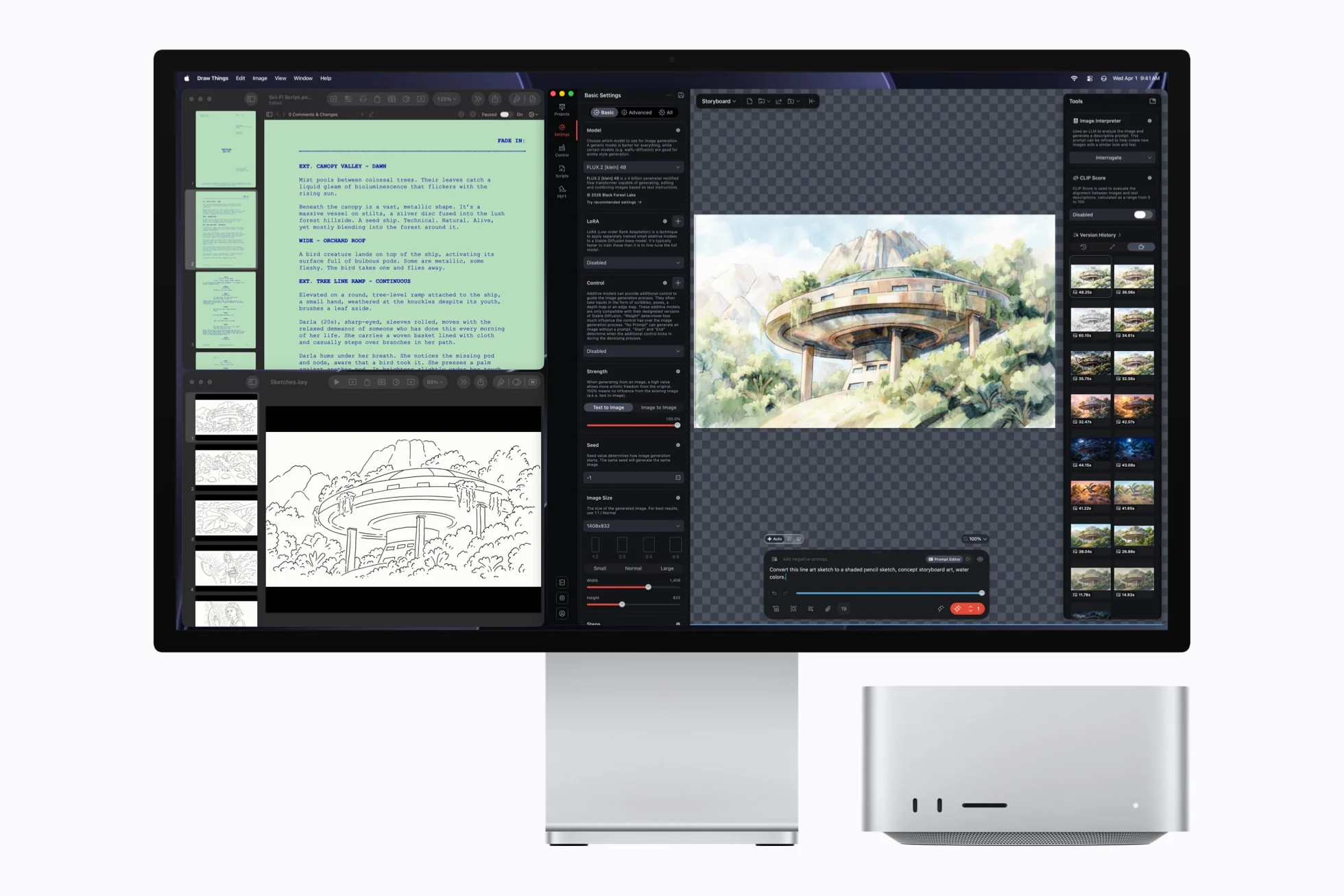
M5 Ultra, Apple’s most powerful chip ever, is built for pros who need to speed through workloads that demand maximum CPU and GPU performance and unified memory bandwidth, such as complex 3D rendering, visual effects, scientific analysis, and running compute-intensive frontier AI models on device.
M5 Ultra uses UltraFusion to connect two dual-die M5 Max chips to form the quad-die architecture — a first for Apple silicon. UltraFusion increases the inter-die bandwidth to over 4.4TB/s and the connection density by over 6x. Together, these ultra-low-latency, high-bandwidth interconnects allow the four dies to behave as a single unified processor. M5 Ultra also features a large up-to-36-core CPU consisting of 12 super cores and 24 performance cores, delivering up to 1.25x higher single-threaded performance and up to 1.3x higher multithreaded performance than M3 Ultra.3
Unprecedented AI and Graphics, Massive Memory Capacity
M5 Ultra features a next-generation GPU with up to 80 cores, incorporating a Neural Accelerator in each core to offer up to 4.5x the peak GPU compute for AI compared to M3 Ultra and over 6x more than M1 Ultra.3 The GPU includes Apple’s latest shader core with second-generation Dynamic Caching, as well as hardware-accelerated mesh shading and third-generation ray tracing, delivering up to 40 percent faster graphics performance than M3 Ultra.3
M5 Ultra incorporates a more capable Media Engine. Dedicated hardware-enabled H.264, HEVC, four ProRes encode and decode engines, and hardware-accelerated AV1 decode make it the ultimate solution for high-resolution video editing. M5 Ultra also includes a 32-core Neural Engine, driving complex AI tasks and Apple Intelligence features securely on device with industry-leading energy efficiency.4
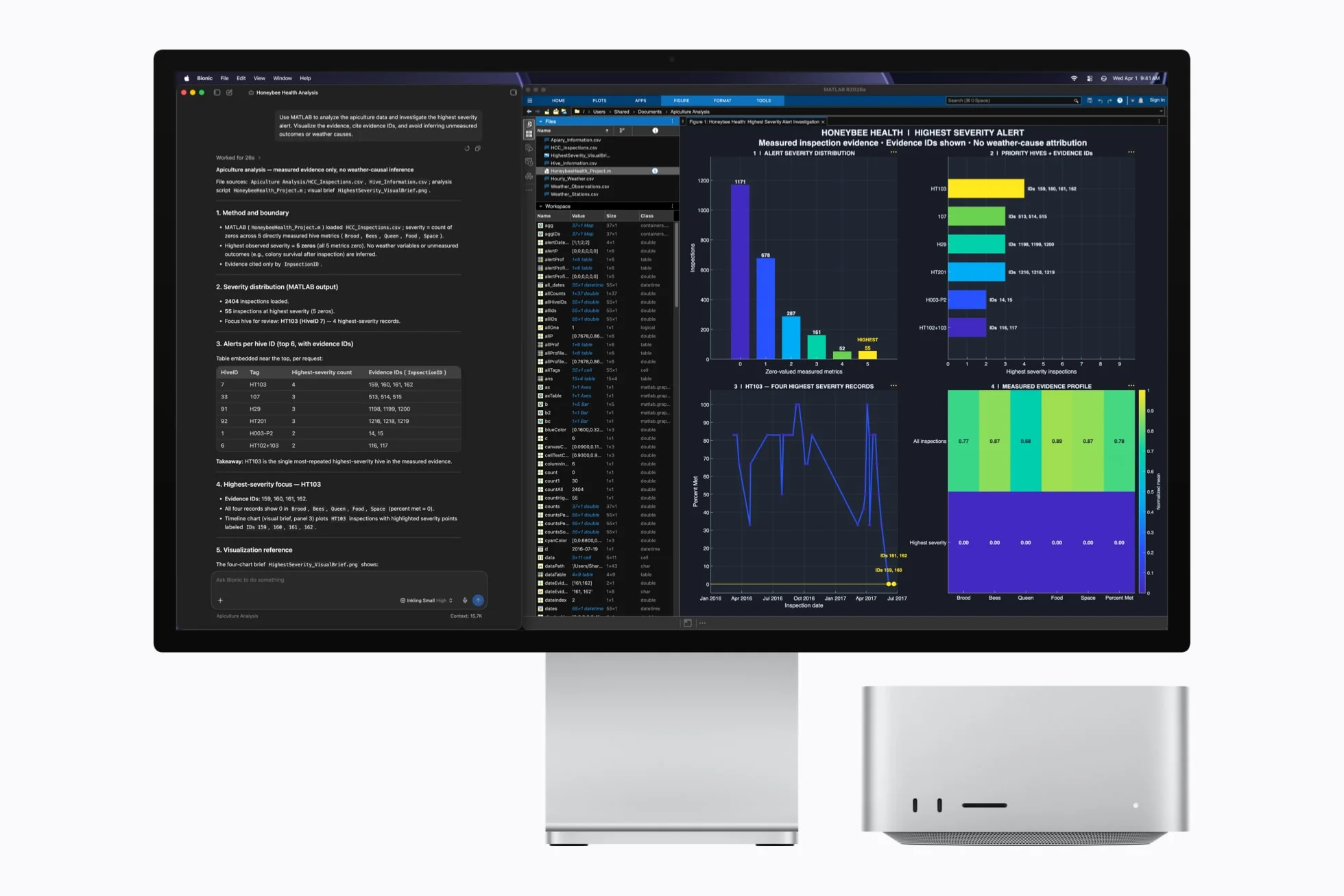
Additionally, M5 Ultra features a massive amount of high-bandwidth unified memory, up to 512GB, and delivers a staggering 1.2TB/s of unified memory bandwidth that is 50 percent higher than M3 Ultra. This lets users store huge datasets entirely in local memory, increase the tokens-per-second speed, and run huge LLMs with hundreds of billions of parameters entirely on device.
Unleashing Power for Developers
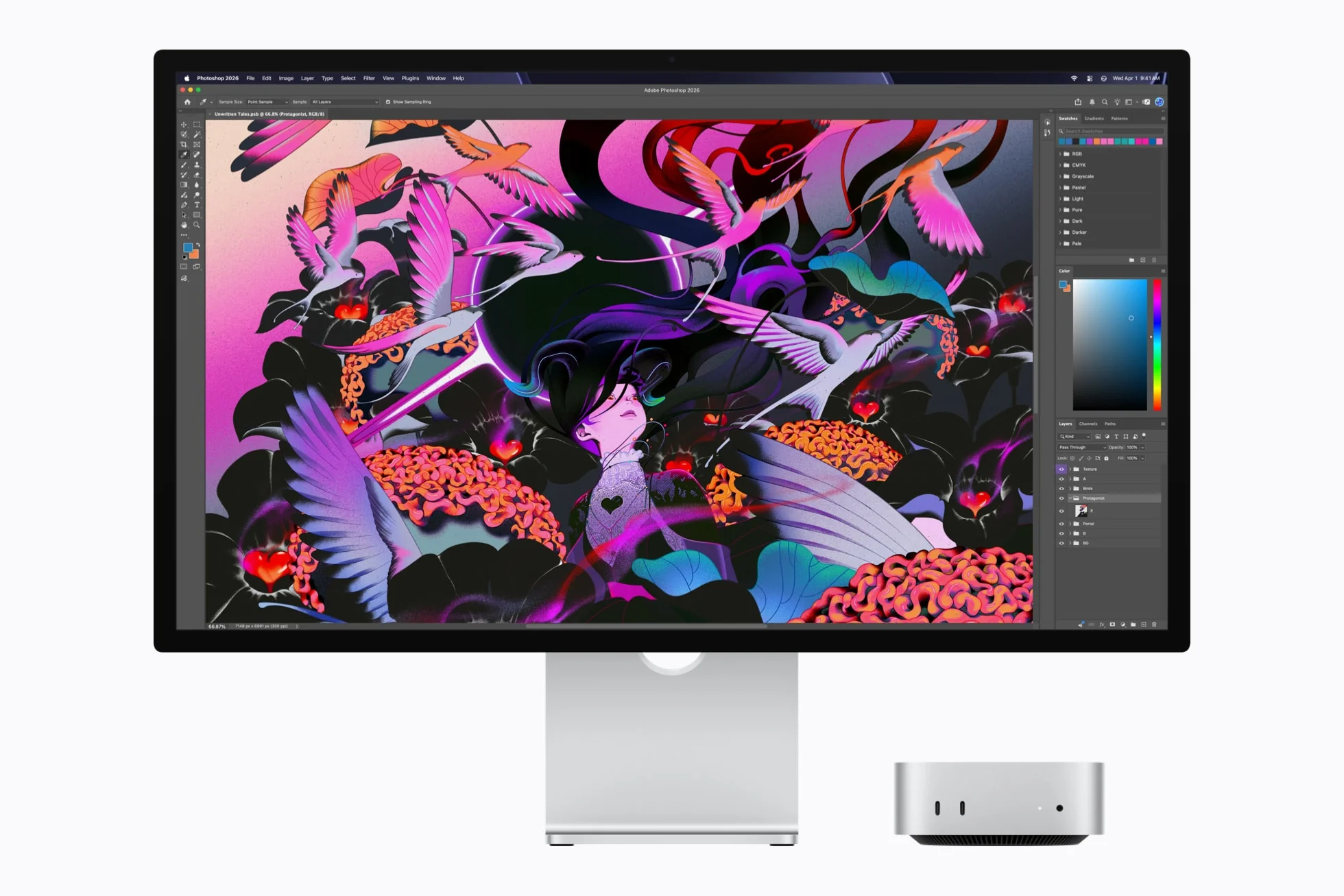
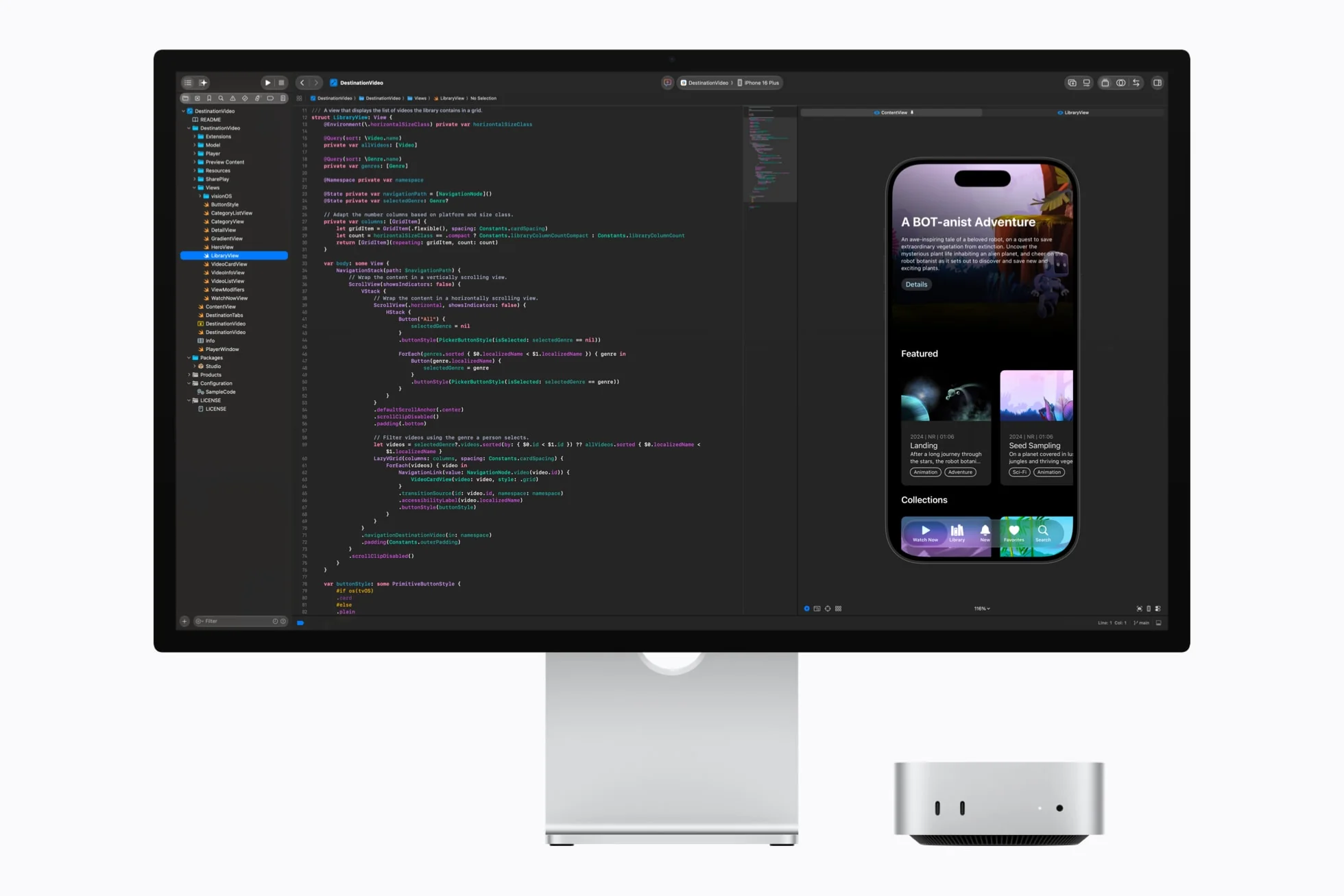
Apple’s developer frameworks and tools — including Core AI, Core ML, Metal, and Xcode — tap directly into the advanced hardware of both chips. Developers can leverage the Dual 16-core Neural Engine in M6, and the Neural Accelerators in the GPU with the massive 512GB unified memory pool and faster 1.2TB/s of unified memory bandwidth in M5 Ultra, to provide incredible AI compute capabilities.
With these frameworks and new chips, developers can run and fine-tune large AI models locally on their Mac. Apple’s developer tools and frameworks automatically optimize performance across the CPU, GPU, and Neural Engine, and give developers the ability to use Apple Foundation Models, App Intents to tap into Apple Intelligence features, or their own proprietary AI models to build and run powerful AI workloads entirely on device.
Share article
Media
Text of this article
Media in this article
Testing was conducted by Apple in August 2026 using shipping competitive systems and select industry-standard benchmarks.
Testing was conducted by Apple in August 2026 using preproduction Mac mini with M6 with 12-core CPU, 12-core GPU, and 32GB of memory; 14-inch MacBook Pro with M5 with 10-core CPU, 10-core GPU, and 32GB of memory; and Mac mini with M1 with 8-core CPU, 8-core GPU, and 16GB of memory. Performance was measured using select industry‑standard benchmarks. Performance tests were conducted using specific computer systems and reflect the approximate performance of Mac mini. See apple.com/mac-mini for more information.
Testing was conducted by Apple in August 2026 using preproduction Mac Studio with M5 Ultra with 36-core CPU, 80-core GPU, and 256GB of memory; Mac Studio with M3 Ultra with 32-core CPU, 80-core GPU, and 256GB of memory; and Mac Studio with M1 Ultra with 20-core CPU, 64-core GPU, and 64GB of memory. Performance was measured using select industry‑standard benchmarks. Performance tests were conducted using specific computer systems and reflect the approximate performance of Mac Studio. See apple.com/mac-studio for more information.
Apple Intelligence features are currently available for testing through the Apple Beta Software Program, and will be available with macOS 27 this fall for users with an Apple Intelligence-enabled device set to a supported language. Apple Intelligence is available with support for these languages: English, Danish, Dutch, French, German, Italian, Norwegian, Portuguese, Spanish, Swedish, Turkish, Vietnamese, Chinese (simplified), Chinese (traditional), Japanese, and Korean. Some features may not be available in all regions or languages. For feature and language availability and system requirements, see apple.com/apple-intelligence.
The source text above remains the property of its publisher and is reproduced for commentary.